
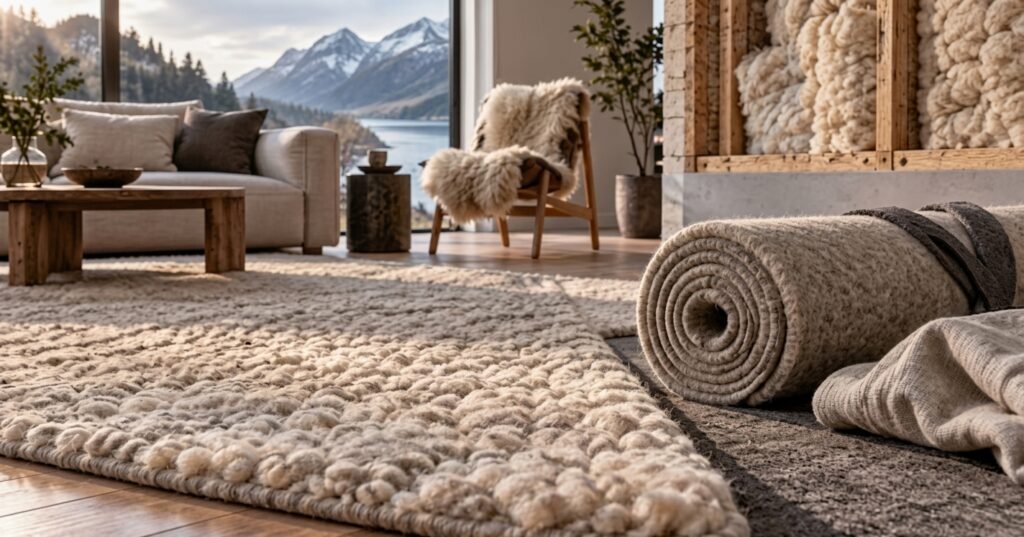

What Does Wollmatten Mean?
Wollmatten can be understood as “wool mats.” The singular form is Wollmatte, while Wolle refers to wool and Matte means mat.
The important point is that the term does not identify one specific brand or standardized product. A Wollmatte can be a decorative floor mat, dense felt sheet, protective pad, acoustic material, or a specialist wool product.
This explains why online searches can produce very different results. Two products may both be described as Wollmatten while having completely different thicknesses, textures, construction methods, and applications.
Quick Answer
Wollmatten are mats made fully or partly from wool, usually sheep’s wool. They can provide warmth, cushioning, texture, sound absorption, or protection depending on how the product is manufactured.
The best choice depends on the job rather than the name alone.
What Are Wollmatten Made From?
Most wool mats use sheep’s wool as their main fiber. Wool itself is a natural protein fiber made primarily from keratin, and its structure gives it useful properties such as elasticity, resilience, temperature management, and moisture interaction.
However, a product described as a wool mat does not automatically contain 100% wool.
Manufacturers may combine wool with:
- Cotton
- Polyester
- Polypropylene
- Other natural fibers
- Synthetic backing
- Latex
- Adhesives
- Dyes
- Protective finishes
- Non-slip materials
If pure wool matters to you, check the complete fiber-content specification rather than relying only on the product title.
This distinction also matters for sustainability. A pure, untreated wool product has different end-of-life characteristics from a heavily backed or bonded composite mat.
How Are Wool Mats Manufactured?
The construction method strongly affects how a wool mat feels and performs.
Common manufacturing methods include:
Felting: Wool fibers are compressed and entangled through moisture, heat, pressure, friction, or mechanical action. Felt can create a dense and stable surface.
Needle punching: Barbed needles repeatedly push through the fibers, locking them together. This method can produce firm, dense mats for practical applications.
Weaving: Wool yarns are interlaced to create a structured textile. Woven mats can provide an attractive appearance and are common in interior applications.
Tufting: Wool yarn is inserted into a backing material. The backing helps stabilize the finished product.
Compression: Loose fibers can be mechanically compressed into thicker pads or sheets for specific applications.
The manufacturing technique affects durability, flexibility, appearance, cleaning requirements, cushioning, and resistance to compression.
What Makes Wollmatten Different From Ordinary Mats?
The main difference is the presence of wool as a significant component.
Wool fibers have a naturally crimped structure. According to The Woolmark Company, this structure contributes to temperature management, elasticity, softness, comfort, and moisture handling.
That gives wool mats characteristics that many buyers associate with natural textile products.
| Feature | Wool Mat | Basic Synthetic Mat |
|---|---|---|
| Main material | Wool or wool blend | Usually synthetic fiber |
| Natural fiber | Yes | Usually no |
| Warm feel | Generally strong | Depends on construction |
| Elasticity | Naturally resilient | Varies by fiber |
| Moisture interaction | Wool can absorb moisture vapor | Depends on material |
| Texture | Natural and varied | Often more uniform |
| Sustainability | Depends on full product | Depends on polymer and construction |
| Maintenance | Product-specific | Product-specific |
| Best use | Varies widely | Varies widely |
Neither material automatically wins for every application. The right choice depends on where the mat will be used and what performance you need.
What Are the Main Types of Wollmatten?
The term covers several product categories.
1. Decorative Wool Floor Mats
These mats are designed for bedrooms, living rooms, offices, hallways, reading spaces, and other interiors.
They focus on:
- Comfort
- Appearance
- Warmth
- Texture
- Floor protection
- Noise reduction
A woven or tufted wool mat can add natural texture without covering an entire floor.
2. Felt Wool Mats
Felt mats are usually dense and firm. They can work as furniture protectors, craft surfaces, pads, liners, and protective layers.
Their performance depends heavily on thickness and density.
3. Wool Insulation Mats
Some wool-based products are manufactured for building insulation. They are different from decorative floor mats and should only be used for construction applications when the manufacturer provides suitable technical specifications.
The U.S. Department of Energy has documented sheep-wool insulation products in building-material research, demonstrating that wool can be used in insulation systems.
4. Acoustic Wool Mats
Dense fibrous materials can help absorb sound energy. Wool-based products may therefore appear in acoustic treatments for interiors.
The exact acoustic performance depends on thickness, density, installation method, frequency range, and the surrounding room.
5. Garden and Horticultural Mats
Some wool-based mats are designed for gardening and plant applications. These can serve purposes such as ground coverage, moisture management, or seasonal protection.
Always follow the manufacturer’s instructions because a decorative wool mat is not automatically suitable for outdoor use.
6. Craft and Workshop Mats
Dense wool felt can also work for crafts, furniture protection, model making, sewing, and other projects where a resilient natural-fiber surface is useful.
What Are the Benefits of Wollmatten?
The benefits vary according to construction, but wool offers several useful natural characteristics.
Warmth and Insulation
Wool’s crimped fibers create spaces that can hold air. This structure contributes to wool’s ability to manage temperature and provide insulation.
A thick floor mat can therefore make a hard surface feel more comfortable, particularly in colder rooms.
Natural Resilience
Wool fibers can bend and recover their shape. This elasticity is one reason wool has long been used for carpets and other products that experience repeated use.
IWTO notes that individual wool fibers can withstand extensive repeated bending without breaking, contributing to the durability associated with wool textiles.
Comfortable Texture
Wool has a distinctive natural feel. Depending on fiber fineness and construction, it can feel soft, springy, firm, or dense.
This makes wool suitable for products where tactile comfort matters.
Moisture Management
Wool can interact with moisture vapor rather than simply behaving like a completely inert surface.
That does not mean a wool mat is waterproof. Spilled liquid can still damage or stain a wool product, particularly if it remains wet for too long.
Acoustic Benefits
Soft and fibrous materials can reduce reflections from hard surfaces. A wool mat can therefore contribute to a quieter-feeling room, although dedicated acoustic products should be evaluated using their tested sound-absorption ratings.
Natural Fire Performance
Wool has naturally favorable fire characteristics compared with many common textile fibers. IWTO describes wool’s composition and natural properties as contributing to flame resistance.
However, never assume that a finished mat is fireproof. Backings, adhesives, dyes, coatings, and construction can change the behavior of the complete product.
Are Wollmatten Environmentally Friendly?
Wool is a renewable natural fiber because sheep grow new fleece. Wool can also biodegrade under suitable conditions.
However, it would be misleading to judge the environmental performance of every wool mat from the fiber alone.
Consider the complete product:
- How the wool was produced
- Whether the wool is recycled
- Dyeing and finishing processes
- Backing materials
- Adhesives
- Packaging
- Transport distance
- Expected service life
- Cleaning requirements
- End-of-life options
IWTO describes wool as biodegradable and emphasizes responsible care and longer product life as important parts of its environmental value.
For buyers focused on sustainability, a durable product with transparent material information can be more useful than simply choosing the product with the strongest environmental marketing claim.
How Should You Choose Wollmatten?
Start with the intended use.
A mat for a bedroom has different requirements from a technical insulation product.
Use this checklist:
- Define the application
- Floor covering
- Furniture protection
- Crafting
- Acoustic treatment
- Insulation
- Garden use
- Check the fiber content
- 100% wool
- Wool blend
- Recycled wool
- Wool with synthetic backing
- Measure thickness
- Thin mats suit low-profile applications.
- Thick mats generally provide more cushioning.
- Check density
- Higher density can create a firmer and more stable product.
- Lower density may produce a softer structure.
- Inspect the backing
- Look for non-slip construction when appropriate.
- Check whether adhesives or synthetic materials are present.
- Review care instructions
- Some wool products require professional cleaning.
- Others can tolerate gentle home care.
- Check technical ratings
- Particularly important for insulation and acoustic applications.
Wollmatten Buying Guide: What Should You Check?
| Buying Factor | Why It Matters | What to Look For |
|---|---|---|
| Wool content | Shows how much wool the product contains | Full fiber specification |
| Thickness | Influences cushioning and insulation | Exact measurement |
| Density | Affects firmness and durability | Manufacturer specification |
| Backing | Influences grip and stability | Material and construction |
| Size | Determines coverage | Exact dimensions |
| Construction | Changes appearance and performance | Felted, woven, tufted, needle-punched |
| Care | Helps prevent damage | Manufacturer cleaning instructions |
| Intended use | Determines suitability | Indoor, outdoor, craft, insulation, etc. |
| Certification | Can support material claims | Recognized certification where relevant |
| Warranty | Provides additional buying confidence | Terms and coverage |
Do not choose a mat simply because it has the word “wool” in its title. The specifications tell you much more.
Are Wollmatten Easy to Clean?
Many wool products can be maintained effectively with appropriate care.
For a floor mat, regular vacuuming can remove loose dirt before it becomes embedded. Spills should be handled promptly using the care method recommended by the manufacturer.
Avoid aggressive scrubbing unless the product instructions specifically allow it. Excessive moisture, harsh chemicals, high heat, or unsuitable cleaning equipment can damage wool fibers or the backing.
The International Wool Textile Organisation provides dedicated wool carpet care guidance covering preventative maintenance, cleaning, and stain treatment.
Simple maintenance routine
- Vacuum regularly.
- Remove spills quickly.
- Follow the manufacturer’s cleaning instructions.
- Avoid unnecessary soaking.
- Keep the mat properly positioned.
- Rotate floor mats when appropriate to distribute wear.
- Allow damp products to dry correctly.
- Use professional cleaning when the manufacturer’s instructions require it.
Can Wollmatten Improve Indoor Comfort?
A wool mat can influence the way a room feels even when it does not dramatically change the room’s temperature.
A soft surface can make hard flooring more comfortable. Wool’s structure can also contribute to insulation and moisture management.
Wool has also been studied for its interaction with indoor pollutants. Research referenced by Woolmark reports that wool carpets can absorb certain airborne compounds, while EPA-published research has examined the interaction between carpet fibers and indoor pollutants.
Still, a wool mat should not be marketed as an air purifier or substitute for ventilation. Indoor air quality depends on many factors, including ventilation, pollutant sources, humidity, cleaning, and building conditions.
Are Wool Mats Suitable for Homes With Pets?
They can be, but the choice requires some care.
Pets can introduce hair, dirt, moisture, and stains. A dense, easy-to-maintain wool mat may work well in some rooms, while a delicate high-pile product may require more maintenance.
Consider:
- Shorter or denser pile
- Easy access for vacuuming
- Stain-care instructions
- Non-slip backing
- Resistance to repeated traffic
- Whether loose fibers are likely to bother your household
The best choice depends on your pet, room, cleaning routine, and the specific mat construction.
What Are the Limitations of Wollmatten?
Wool mats offer useful characteristics, but they are not perfect for every situation.
Common limitations include:
- Higher purchase prices for premium wool products
- Possible shedding during early use
- Sensitivity to unsuitable cleaning methods
- Potential staining from spills
- Performance differences between products
- Need for proper installation in technical applications
- Possible incompatibility with wet environments
- Additional materials in blended products
A pure wool floor mat should not automatically be used as insulation, and an insulation batt should not be used as a decorative rug.
Application matters.
Wollmatten vs Synthetic Mats: Which Should You Choose?
There is no universal answer because the products serve different priorities.
Choose a wool-based mat when you value characteristics such as:
- Natural fiber content
- Warm tactile feel
- Elasticity
- Long-term textile performance
- Natural appearance
- Renewable raw material
A synthetic mat may be more suitable when you prioritize:
- Specific moisture resistance
- Very low purchase cost
- Certain outdoor applications
- Easy mass-market replacement
- Specialized technical performance
Instead of comparing materials only by name, compare the specifications for the exact application.
How Long Can a Wool Mat Last?
Service life depends on construction, fiber quality, traffic, cleaning, moisture exposure, and maintenance.
A high-quality wool floor covering can remain useful for many years when properly cared for. IWTO highlights wool’s mechanical resilience and durability as important reasons for its long use in carpets and textiles.
For a technical mat, however, lifespan should be based on the manufacturer’s performance information and installation conditions.
Good maintenance can extend useful life by reducing accumulated dirt, preventing avoidable damage, and allowing small problems to be addressed early.
Where Can You Use Wollmatten?
The broad category can fit many applications.
Popular locations include:
- Bedrooms
- Living rooms
- Home offices
- Reading areas
- Hallways
- Children’s spaces
- Craft rooms
- Workshops
- Furniture surfaces
- Acoustic installations
- Building insulation systems
- Gardening applications
The critical step is matching the product specification to the environment.
For example, a decorative bedroom mat may prioritize softness and appearance, while an insulation mat needs documented thermal performance and correct installation.
What Should You Ask Before Buying?
Before purchasing, ask these practical questions:
Is this product actually made for my intended use?
A wool-based product is not automatically suitable for every application.
How much wool does it contain?
Check whether “wool” refers to the entire product or only its surface.
What is the backing made from?
Backing can significantly affect grip, durability, recyclability, and cleaning.
What are the exact dimensions?
Measure the available area before ordering.
How thick and dense is it?
Thickness alone does not tell you everything about performance.
How should it be cleaned?
Follow the manufacturer’s instructions rather than applying generic cleaning advice.
Does it have relevant certification or test data?
This becomes particularly important for technical, construction, acoustic, or safety-related products.
Trust Signals: How to Research Wool Mats Responsibly
Reliable information matters when a product has many different applications.
For material science and wool characteristics, useful industry references include The Woolmark Company and the International Wool Textile Organisation (IWTO). Woolmark publishes technical information about wool fiber structure, while IWTO provides information on wool durability and carpet care.
For indoor-environment questions, the U.S. Environmental Protection Agency (EPA) provides independent information about carpets, pollutants, ventilation, and indoor air quality.
When buying a product, also look for:
- A clear manufacturer identity
- Full material information
- Product dimensions
- Care instructions
- Technical specifications
- Relevant certifications
- Warranty information
- Clear intended-use instructions
These details provide stronger trust signals than vague marketing claims.
Frequently Asked Questions About Wollmatten
What does Wollmatten mean?
Wollmatten means “wool mats” in German. It is the plural form associated with Wollmatte. The term describes a broad category rather than one specific product.
Are Wollmatten made from 100% wool?
Not always. Some products use pure wool, while others combine wool with synthetic fibers, natural fibers, backing materials, adhesives, dyes, or finishes. Always check the complete material specification.
Are Wollmatten warm?
Wool can provide a naturally warm and comfortable surface. Its crimped fiber structure helps trap air and contributes to temperature management, but the actual performance depends on thickness and construction.
Can Wollmatten be used as insulation?
Some wool mats are specifically manufactured for insulation, but not every wool mat is suitable for buildings. Use only products designed and tested for the intended construction application.
Are Wollmatten environmentally friendly?
They can have strong environmental advantages, but the complete product matters. Wool is renewable and can biodegrade under suitable conditions, while backing, dyes, adhesives, production, transport, and disposal also affect the overall footprint.
How do you clean Wollmatten?
Follow the manufacturer’s care instructions. Regular vacuuming and prompt spill treatment are generally useful for appropriate floor products, while excessive moisture and harsh cleaning methods should be avoided unless specifically approved.
Final Thoughts: Is a Wool Mat Right for You?
Wollmatten are more than a single type of floor covering. The term covers a broad range of wool-based mats, including decorative floor products, felt pads, acoustic materials, craft surfaces, garden products, and specialist insulation.
The natural structure of wool gives it useful characteristics such as resilience, comfort, temperature management, and moisture interaction. However, the finished product’s performance depends on its fiber content, density, thickness, construction, backing, and intended use.
Before buying, focus on the specifications instead of the product name alone. Compare the material composition, dimensions, density, care requirements, certifications, and technical data with the job you need the mat to perform.
A carefully selected wool mat can add comfort, natural texture, durability, and practical value to the right space. The smartest purchase is the one that matches the material and construction