
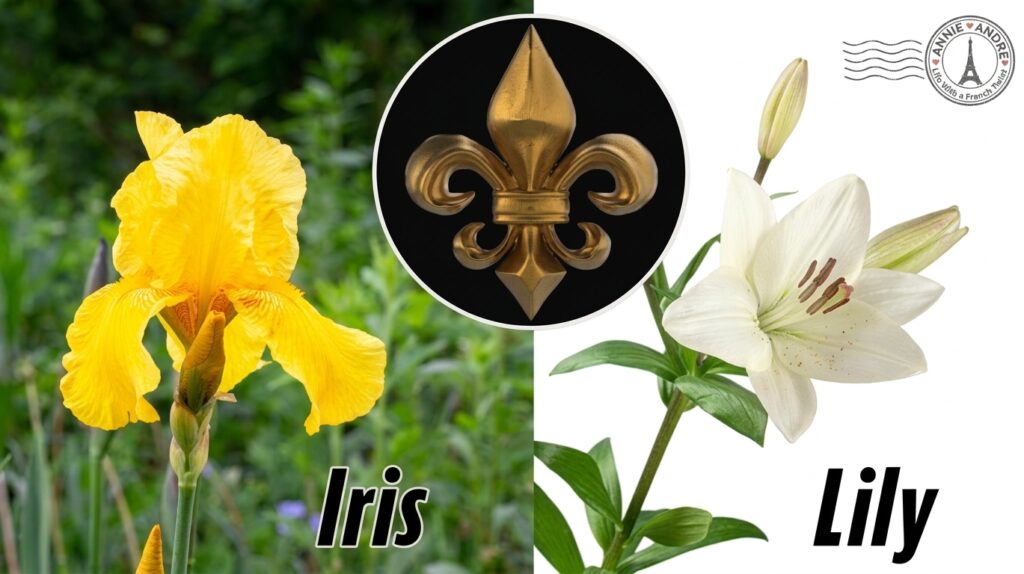

Fleur d’elise A distinctive floral symbol can add character to jewelry, artwork, clothing, architecture, and decorative objects. Yet names such as fleur d’elise can create confusion because people may use them when referring to floral or fleur-de-lis-inspired designs. Understanding the terminology, symbolism, and history helps you recognize what a particular design represents and choose it with confidence.
The term fleur d’elise is not as historically standardized as fleur-de-lis. In many modern contexts, it may describe a decorative flower motif or function as a variation, spelling, or creative name associated with the familiar fleur-de-lis form.
What Does Fleur d’Elise Mean?
Fleur d’Elise can be interpreted literally as a French-style expression connected with a flower and the name Elise. However, it should not automatically be treated as the historical French name for the fleur-de-lis.
The established French term fleur-de-lis translates roughly to “lily flower.” It describes a stylized three-petal emblem that became particularly important in European heraldry and French royal imagery.
When you encounter fleur d’elise on a product, artwork, brand, or decorative design, examine the specific context. The creator may be using the phrase as a personal, artistic, or commercial name rather than making a historical claim.
Where Did Fleur d’Elise Come From?
The strongest historical connection behind the phrase leads to the fleur-de-lis, rather than a separate ancient symbol called fleur d’elise.
The fleur-de-lis has appeared in European heraldry for centuries. Its exact origins have been debated, while its association with French monarchy and heraldic traditions became especially prominent over time.
This distinction matters for accurate content. A modern designer can call a product fleur d’elise, but that does not establish a separate historical tradition.
Fleur d’Elise vs. Fleur-de-Lis
The two expressions can look similar in searches, but they should not be treated as identical without context.
| Feature | Fleur d’Elise | Fleur-de-Lis |
|---|---|---|
| Common use | Modern or creative naming | Established historical term |
| Basic association | Floral or decorative design | Stylized lily emblem |
| Historical standardization | Limited | Strong |
| Heraldic significance | Depends on context | Major |
| French royal association | Not inherently established | Strong historical association |
| Modern applications | Art, fashion, jewelry, branding | Heraldry, architecture, fashion, sports, decoration |
| Design flexibility | Often broad | Usually recognizable three-part form |
If you are researching a specific object called fleur d’elise, use the manufacturer’s or artist’s description as the primary reference. The visual design may tell you whether it actually incorporates a fleur-de-lis structure.
What Does the Symbol Represent?
The meaning depends heavily on the design and cultural setting.
The fleur-de-lis has been associated with several ideas, including:
- Royal authority
- Heritage
- Nobility
- Purity
- French identity
- Tradition
- Elegance
- Religious symbolism in certain historical contexts
A modern fleur d’elise design can build on these associations while adding a more personal interpretation.
For example, a floral pendant may represent elegance and family heritage, while a decorative wall pattern may simply emphasize symmetry and beauty.
How Does Fleur d’Elise Look?
There is no single universally accepted visual standard for fleur d’elise. That makes the actual design especially important.
A fleur-de-lis-inspired version often contains:
- A central upright petal or leaf.
- Two curved side elements.
- A balanced, symmetrical structure.
- Decorative lines or flourishes.
- A pointed or rounded lower section.
Artists may simplify these components or create elaborate versions with vines, flowers, geometric details, or ornamental borders.


Where Is Fleur d’Elise Used?
A floral emblem works well across many creative fields because its shape is recognizable and easy to adapt.
Jewelry
Designers can incorporate floral motifs into:
- Necklaces
- Earrings
- Rings
- Bracelets
- Brooches
- Pendants
A small design can create a subtle heritage-inspired appearance, while a larger pendant can become the central feature of an outfit.
Fashion
Floral emblems frequently appear on:
- Embroidered garments
- Scarves
- Handbags
- Shoes
- Accessories
- Decorative buttons
The motif works particularly well when designers want a classic or ornamental appearance.
Home Decor
The shape also translates effectively into interior decoration. It may appear on furniture, metalwork, wallpaper, tiles, gates, mirrors, wall art, and architectural details.
Graphic Design
Designers may use a fleur-like emblem for logos, badges, labels, invitations, certificates, and decorative borders.
Fleur d’Elise in Jewelry
Jewelry gives this type of symbol a particularly personal role.
A pendant can represent heritage or elegance without requiring a large design. Engraving also allows buyers to combine the motif with initials, dates, names, or other meaningful elements.
When selecting a piece, consider:
- Metal type
- Size
- Finish
- Motif proportions
- Chain or setting quality
- Personal symbolism
- Intended occasion
A simple polished design generally suits everyday wear, while detailed versions work well as statement pieces.
Fleur d’Elise in Fashion and Home Decor
The decorative strength of the motif comes from its symmetry. Repeated symmetrical forms can create rhythm across fabric, furniture, walls, and architectural surfaces.
For fashion, smaller repeated motifs can create a refined pattern. In interiors, a larger emblem can become a visual focal point.
Designers should also consider scale. A highly detailed emblem can lose clarity when reproduced too small, while an oversized motif can dominate a space.
Why Does Fleur d’Elise Remain Popular?
Classic symbols survive because designers can reinterpret them without losing their recognizable character.
The fleur-de-lis, for example, appears in historical heraldry but also in modern architecture, sports identities, decorative arts, and fashion. The continued use of related floral motifs shows how an old visual language can adapt to contemporary tastes.
Another advantage is versatility. The basic form can look traditional in one setting and modern in another simply through changes in line weight, material, color, and proportion.
How Can You Choose the Right Design?
If you’re considering a fleur d’elise product or decorative piece, start with the purpose rather than the name.
For everyday jewelry
Choose a compact design with clean lines and a durable finish.
For a gift
Look for a design connected to the recipient’s interests, heritage, initials, or personal story.
For interior decoration
Consider the room’s existing shapes and patterns before selecting an elaborate emblem.
For artwork
Choose a version whose proportions and surrounding elements support the composition.
The best choice is one that combines visual appeal with a clear reason for using the symbol.
Historical Accuracy Matters
One important point deserves emphasis: fleur d’elise should not automatically be presented as an established historical term equivalent to fleur-de-lis.
For trustworthy writing, distinguish between:
- The established fleur-de-lis tradition.
- Modern interpretations of the motif.
- A product or artwork specifically named “Fleur d’Elise.”
- Personal or artistic uses of the phrase.
This distinction improves accuracy and prevents readers from confusing modern branding with documented history.
What Makes the Fleur-de-Lis Historically Important?
The fleur-de-lis became deeply connected with French history and heraldry, although its precise origin remains a subject of historical discussion.
The emblem later appeared in coats of arms, flags, architecture, decorative arts, and institutional identities. Its three-part form also made it visually effective as a repeated heraldic device.
Its cultural reach eventually extended beyond France. Different communities and organizations adopted the symbol for their own historical, civic, religious, or decorative purposes.
Complete Fleur d’Elise Reference Table
| Topic | Key Information |
|---|---|
| Term | Fleur d’Elise |
| Closely related established term | Fleur-de-lis |
| General visual theme | Stylized floral or lily-like motif |
| Historical fleur-de-lis meaning | Associated with heraldry and French history |
| Design character | Symmetrical, ornamental, adaptable |
| Jewelry use | Pendants, rings, earrings, bracelets |
| Fashion use | Prints, embroidery, accessories |
| Interior use | Metalwork, furniture, tiles, wall decoration |
| Graphic use | Logos, borders, badges, invitations |
| Best research approach | Check the specific design and its source |
| Main caution | Do not assume every modern name has historical origins |
| Modern appeal | Heritage, elegance, symmetry, decoration |
Frequently Asked Questions
Is Fleur d’Elise the same as fleur-de-lis?
Not necessarily. Fleur-de-lis is the established historical term for a stylized lily emblem. Fleur d’Elise may be a modern, creative, personal, or commercial expression associated with a similar floral design.
What does fleur-de-lis symbolize?
Its symbolism varies by context. Historically, it became strongly associated with French monarchy and heraldry, while other uses have connected it with heritage, purity, nobility, religion, or civic identity.
Is Fleur d’Elise a French phrase?
It has a French-style construction, but context matters. The expression should not automatically be treated as the standardized historical French name for the fleur-de-lis.
Where can floral emblem designs be used?
Almost anywhere decorative design is appropriate. Common applications include jewelry, clothing, architecture, furniture, home decor, graphic design, artwork, and accessories.
Why is the fleur-de-lis so recognizable?
Its distinctive three-part silhouette makes it easy to identify. Symmetry and strong vertical lines also make the form effective for repeated patterns and heraldic designs.
How should I research a product called Fleur d’Elise?
Start with the product’s original maker or seller. Then examine the design, description, manufacturing details, and any historical claims separately so you can distinguish branding from documented history.
Sources and Trust Signals
For historical and terminology checks, useful primary or authoritative references include the Encyclopaedia Britannica, The Metropolitan Museum of Art, and Louvre Museum. These types of institutional sources provide stronger foundations for historical claims than unsourced product pages or copied articles.
When evaluating a particular Fleur d’Elise product, prioritize the original manufacturer, artist, museum record, catalog, or other first-party documentation.
Final Thoughts
Fleur d’Elise is best understood through context rather than a single fixed definition. The phrase can refer to a modern floral design or name, while the closely related fleur-de-lis has a well-established history in heraldry, French culture, decorative art, and architecture.
If you’re writing about, buying, or designing a piece with this motif, check the original source and distinguish documented history from modern interpretation. That simple step gives you a more accurate understanding—and helps you appreciate the design for both its visual beauty and cultural background.