
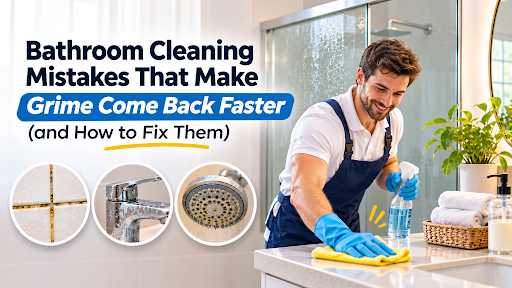
There is nothing more frustrating than spending time cleaning your bathroom, only to notice soap scum on the shower doors, dark grout lines, or water stains around the faucets a few days later. You may assume the bathroom needs more frequent cleaning, but the problem could actually be your cleaning routine.
Bathrooms are constantly exposed to moisture, soap residue, body oils, mineral deposits, and everyday dirt. When these substances are not removed properly, they accumulate on different surfaces and make the bathroom look dirty again much sooner than expected.
The good news is that keeping a bathroom clean does not always require stronger cleaning products or hours of scrubbing. Sometimes, changing a few everyday habits can make a significant difference.
Here are ten common bathroom cleaning service mistakes that make grime return faster and practical ways to fix them.
1. Wiping Away Cleaning Products Too Quickly
One common mistake is spraying a cleaning solution onto bathroom surfaces and wiping it away almost immediately.
Cleaning products are designed to work for a specific amount of time. This is often called contact time or dwell time. Removing a product too quickly may prevent it from loosening stubborn soap residue, mineral deposits, and other buildup effectively.
Why it makes grime return:
When residue is only partially removed, a thin layer can remain on the surface. Fresh soap, water droplets, and dirt can stick to this leftover film, making the surface look dirty again.
How to fix it:
- Read the product label before applying a cleaner.
- Allow the recommended contact time.
- Avoid letting cleaning solutions dry on surfaces unless the instructions permit it.
- Rinse thoroughly when required.
- Use a clean microfiber cloth to remove loosened residue.
Giving cleaning products enough time to work can reduce the need for repeated scrubbing.
2. Using the Same Cleaner on Every Bathroom Surface
A bathroom contains several materials, including ceramic tiles, porcelain, glass, chrome, stainless steel, acrylic, and natural stone.
Using the same multipurpose cleaner everywhere might seem convenient, but different surfaces have different cleaning requirements.
For example, acidic cleaners can damage marble and other acid-sensitive natural stones. Abrasive products can scratch delicate finishes, while certain chemicals may affect protective coatings on glass or metal fixtures.
Why it makes grime return:
Using an unsuitable cleaning product can damage a surface finish or leave residue behind. Some damaged finishes may also become more difficult to maintain.
How to fix it:
- Identify the surface material before selecting a cleaner.
- Use products specifically labeled as suitable for that material.
- Avoid abrasive scrubbers on delicate finishes.
- Follow manufacturer recommendations for natural stone, glass, and metal fixtures.
- Test unfamiliar products in a small, inconspicuous area.
The right cleaning product can make maintenance easier while protecting bathroom surfaces from unnecessary damage.
3. Ignoring Grout Lines Between Tiles
Bathroom tiles may look clean from a distance, but the grout between them can tell a different story.
Grout is porous in many installations, allowing moisture, soap residue, and dirt to accumulate. Unlike smooth tiles, grout lines are difficult to clean with a quick wipe.
Over time, these areas can become discolored, especially around showers, bathtubs, and frequently used bathroom floors.
Why it makes grime return:
Cleaning only the tile surface leaves dirt and residue trapped in the grout. As moisture and everyday debris continue to collect, the dark appearance returns.
How to fix it:
- Include grout lines in your regular cleaning routine.
- Use a grout-compatible cleaning product.
- Scrub gently with a suitable soft or medium-bristle brush.
- Rinse away loosened dirt and cleaning residue.
- Allow the area to dry completely.
Avoid aggressive scrubbing that could damage the grout or loosen it from between tiles.
If discoloration remains despite appropriate cleaning, the issue may involve staining, deteriorating grout, or moisture-related damage rather than ordinary surface dirt.
4. Allowing Soap Scum to Build Up on Shower Doors
Soap scum is one of the biggest reasons bathrooms lose their freshly cleaned appearance.
It develops when soap ingredients interact with minerals in water, leaving a film on shower doors, tiles, bathtubs, and fixtures. Body oils and shampoo residue can contribute to the buildup.
When these deposits are left untreated, shower doors become cloudy and bathroom surfaces gradually lose their shine.
Why it makes grime return:
New soap residue sticks to existing deposits, creating additional layers of buildup. The longer these deposits remain, the more difficult they can become to remove.
How to fix it:
- Rinse shower walls after use.
- Use a squeegee to remove excess water from glass doors.
- Clean shower surfaces regularly instead of waiting for thick buildup.
- Choose a cleaner suitable for the material.
- Dry metal fixtures with a soft cloth to reduce water spots.
Small maintenance habits after each shower can prevent soap scum from becoming a recurring problem.
5. Leaving Bathroom Surfaces Wet After Cleaning
Cleaning removes visible dirt, but leaving surfaces wet can create conditions that encourage new problems.
Bathrooms naturally experience high humidity because of showers, baths, and running water. When moisture remains on walls, floors, grout, and corners, surfaces take longer to dry.
Persistent dampness can encourage mold and mildew growth, particularly in poorly ventilated bathrooms.
Why it makes grime return:
Moisture creates favorable conditions for mold and mildew on suitable surfaces. As water evaporates, it can also leave mineral deposits behind, especially in areas with hard water.
How to fix it:
- Wipe wet countertops, faucets, and shower surfaces.
- Use a squeegee after showering.
- Keep bath mats dry and wash them regularly.
- Hang towels where they can dry completely.
- Open windows when practical or run an exhaust fan during and after showers.
An exhaust fan should vent outdoors rather than into an attic or another enclosed area.
If dampness continues despite these habits, investigate possible ventilation problems or hidden plumbing leaks instead of simply cleaning the affected area repeatedly.
6. Reusing Dirty Cleaning Cloths and Sponges
Your cleaning tools can contribute to recurring bathroom dirt if they are not maintained properly.
Using the same cloth to wipe the toilet, sink, countertops, and shower can transfer dirt and microorganisms between surfaces. Dirty sponges, toilet brushes, and mop heads can also spread residue rather than remove it.
Why it makes grime return:
Contaminated cleaning tools can redistribute dirt onto surfaces that have already been cleaned. Damp tools may also develop unpleasant odors when stored without proper drying.
How to fix it:
- Use separate clothes for toilets, sinks, and other surfaces.
- Wash reusable microfiber cloths after cleaning.
- Replace worn-out sponges and heavily soiled brushes.
- Rinse cleaning tools thoroughly after use.
- Allow brushes, mop heads, and clothes to dry completely before storing them.
A simple color-coded cleaning system can help prevent cross-contamination and make bathroom cleaning more organized.
7. Cleaning the Bathroom Floor First
Starting with the bathroom floor might seem logical because it is one of the largest surfaces. However, doing so can create extra work.
While cleaning mirrors, countertops, sinks, showers, and toilets, dust, hair, soap residue, and cleaning solutions can fall onto the floor.
Why it makes grime return:
Debris from higher surfaces settles on the floor after it has already been cleaned. This can leave streaks, footprints, and fresh dirt on an otherwise clean surface.
How to fix it:
Follow a top-to-bottom cleaning sequence:
- Remove loose items and empty the trash.
- Dust light fixtures, vents, shelves, and higher surfaces.
- Clean mirrors, countertops, and sinks.
- Clean the bathtub, shower walls, and fixtures.
- Clean the toilet using appropriate products.
- Sweep or vacuum the floor.
- Mop the floor last.
This approach prevents dirt from falling onto surfaces you have already cleaned.
8. Overlooking Hidden Areas Where Grime Collects
A bathroom can look spotless while dirt and moisture continue to accumulate in less visible places.
Some commonly overlooked areas include:
- The bottom edges of shower doors.
- Corners around bathtubs.
- Behind the toilet.
- Faucet bases and handles.
- Sink drains and overflow openings.
- Shower curtain hems and liners.
- Bathroom exhaust fan covers.
- Areas around plumbing fixtures.
These spaces often collect moisture, hair, soap residue, and dust.
Why it makes grime return:
When hidden buildup is left untreated, it can contribute to persistent odors and spread residue to nearby surfaces. Cleaning only visible areas does not address the entire bathroom.
How to fix it:
Create a rotating checklist of overlooked areas and include them in your weekly or monthly cleaning routine, depending on how quickly they accumulate dirt.
Pay particular attention to the areas around sinks, toilets, and bathtubs. If you notice persistent moisture around plumbing connections, do not assume it is simply a cleaning issue. A leak may require professional attention.
For problems involving loose fixtures, damaged fittings, or minor household repairs, handyman services may be useful for addressing maintenance issues beyond routine cleaning.
9. Mixing Different Cleaning Products
Combining bathroom cleaning products might seem like a shortcut for removing stubborn stains, but it can create serious chemical hazards.
For example, mixing bleach with ammonia-containing products can release toxic gases. Mixing bleach with acidic cleaners, including some toilet bowl cleaners and vinegar-based products, can release chlorine gas.
Why it makes grime return:
Mixing incompatible products does not guarantee better cleaning. It can damage surfaces, leave chemical residue, and create unsafe conditions inside the bathroom.
How to fix it:
- Never mix different cleaning products unless the manufacturers explicitly confirm that doing so is safe.
- Read product labels before use.
- Use one product at a time.
- Rinse surfaces between products when the instructions require it.
- Keep the bathroom ventilated while cleaning.
- Store cleaning chemicals in their original containers and away from children and pets.
If products are accidentally mixed and you notice coughing, breathing difficulties, or eye irritation, leave the area immediately and contact poison control or emergency services.
Safe cleaning practices should always take priority over removing stubborn stains quickly.
10. Following an Inconsistent Cleaning Schedule
Waiting until a bathroom looks visibly dirty before cleaning it can make maintenance more difficult.
By that point, soap scum may have hardened, water spots may have become more noticeable, and dirt may have accumulated in grout lines and corners.
Why it makes grime return:
Long gaps between cleaning sessions allow multiple layers of residue to build up. Removing them requires more effort than maintaining surfaces regularly.
How to fix it:
Establish a cleaning schedule based on how frequently the bathroom is used.
| Frequency | Cleaning tasks |
| After each shower | Rinse surfaces, use a squeegee, hang towels to dry |
| Daily or every few days | Wipe sink surfaces, remove visible hair, keep counters dry |
| Weekly | Clean the toilet, sink, shower, mirrors, and bathroom floor |
| Monthly or as needed | Check grout, shower door tracks, exhaust fan covers, and overlooked areas |
A household with multiple occupants may need more frequent cleaning than a bathroom used occasionally.
The goal is not to clean every surface every day. It is to prevent everyday moisture and residue from turning into stubborn buildup.
How to Keep Bathroom Grime From Coming Back
Avoiding common cleaning mistakes is a good start, but maintaining a clean bathroom also requires a few consistent habits.
Here are some simple practices that can help prevent recurring buildup:
- Control moisture: Run the exhaust fan, dry wet surfaces, and avoid leaving damp towels on the floor.
- Remove residue regularly: Rinse shower walls and clean soap scum before it becomes difficult to remove.
- Use suitable products: Match cleaning solutions to the materials in your bathroom.
- Pay attention to grout: Include tile joints and corners in your regular cleaning routine.
- Maintain cleaning tools: Wash cloths, brushes, and mop heads after use.
- Check for plumbing problems: Persistent dampness, unexplained water stains, or recurring moisture around fixtures may indicate a leak.
Consistency matters more than aggressive scrubbing. A few minutes of maintenance after regular bathroom use can reduce the amount of work needed during your next cleaning session.
For households managing several cleaning tasks, establishing a broader house cleaning routine can also make bathroom maintenance easier to manage alongside other household chores.
When Should You Consider Professional Bathroom Cleaning?
Some bathroom cleaning problems are manageable with regular household maintenance. Others require more time, specialized products, or attention to areas that are difficult to clean thoroughly.
You may want to consider professional help when:
- Soap scum has accumulated on shower doors, tiles, and fixtures.
- Grout lines have significant surface buildup.
- The bathroom has not received a thorough cleaning in several weeks.
- You are preparing your home for guests or moving into a new property.
- Regular cleaning is becoming difficult to fit into your schedule.
A professional Bathroom cleaning service can help address accumulated grime and maintain frequently used bathroom surfaces.
Professional cleaning, however, is not a substitute for repairing damaged grout, fixing plumbing leaks, or addressing persistent mold caused by moisture problems. These issues may require separate repair or remediation work.
Final Thoughts
Bathroom grime does not always return because you are not cleaning frequently enough. Sometimes, it returns because the underlying moisture, residue, and buildup were never properly addressed.
Using unsuitable products, skipping grout lines, leaving surfaces wet, and overlooking hidden corners can all make a bathroom look dirty again sooner than expected.
The solution is to clean according to the surface, allow products to work as directed, remove excess moisture, and follow a consistent maintenance routine.
A bathroom does not need constant scrubbing to stay clean. It needs the right cleaning habits, attention to overlooked areas, and timely maintenance when a problem goes beyond ordinary dirt.