
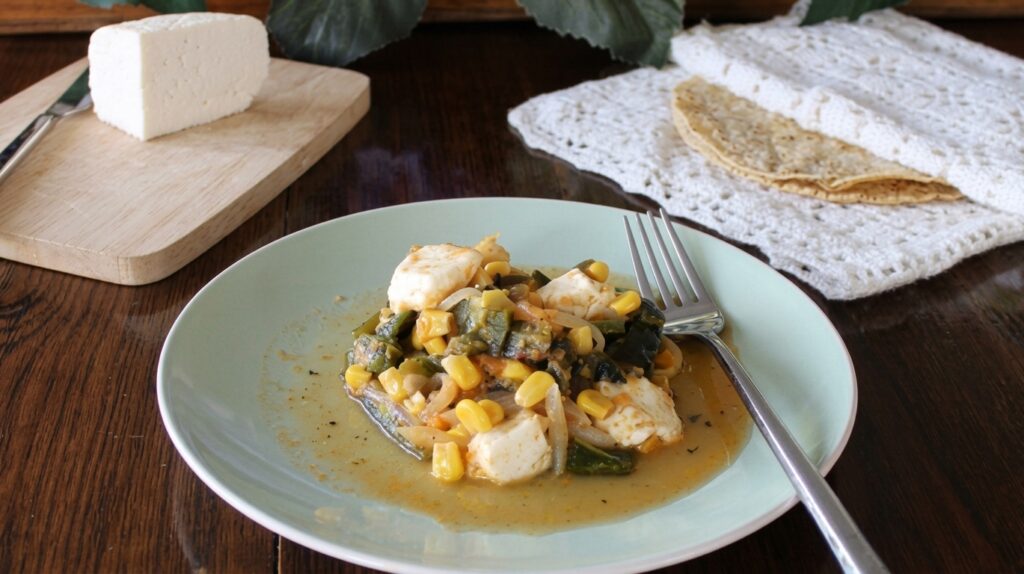

Rajas con queso Craving a comforting Mexican dish that combines smoky peppers, creamy sauce, onions, and melted cheese? Rajas con queso delivers all four in one skillet, but poorly roasted poblanos or an overheated dairy sauce can quickly ruin the texture. The good news is that the method is simple: char the peppers, peel them, slice them into strips, cook them with onion, then finish with cream and cheese for a rich, satisfying dish.
The Spanish word rajas means strips or slices. In Mexican cooking, the term commonly refers to strips of roasted poblano peppers, often prepared with onion, cream, corn, or cheese. Rajas con crema is a well-established Mexican preparation, and cheese is a popular addition in many versions.
What Makes Rajas con Queso So Delicious?
The magic starts with the poblano pepper.
Roasting creates a lightly smoky flavor while softening the pepper. Once the skin is removed, the pepper becomes tender enough to absorb the flavors of sautéed onion, cream, and cheese.
The finished dish has several textures working together:
- Soft roasted poblano strips
- Sweet, tender onion
- Smooth creamy sauce
- Melted cheese
- Optional sweet corn for contrast
The flavor is usually savory and creamy rather than aggressively hot. The heat level depends on the individual poblano peppers and whether you leave some seeds and veins intact.
Rajas con Queso Ingredients
A simple skillet version needs only a handful of ingredients.
| Ingredient | Amount | Purpose |
|---|---|---|
| Poblano peppers | 5–6 large | Main ingredient and smoky flavor |
| White onion | 1 large | Sweetness and savory depth |
| Mexican crema | ¾ cup | Creamy, slightly tangy sauce |
| Melting cheese | 1½ cups | Richness and stretch |
| Vegetable oil | 1–2 tbsp | Sautéing |
| Garlic | 1–2 cloves | Extra savory flavor |
| Salt | To taste | Balances the dish |
| Black pepper | ¼ tsp | Mild seasoning |
| Corn kernels | ½–1 cup | Optional sweetness |
| Chicken or vegetable broth | ¼ cup | Optional sauce adjustment |
| Warm corn tortillas | As needed | Serving |
Traditional and modern recipes vary in their choice of dairy and cheese. Food Network, for example, uses poblano chiles, onions, sour cream, and Oaxaca or mozzarella cheese, while other Mexican recipes use crema, queso fresco, cream cheese, or evaporated milk.
Which Cheese Is Best for Rajas con Queso?
Choose a cheese that melts smoothly without becoming greasy.
Good options include:
- Oaxaca cheese
- Chihuahua cheese
- Monterey Jack
- Mozzarella
- Quesadilla cheese
- Mild Mexican melting cheese
Oaxaca cheese gives the dish a particularly appealing stretch, while Monterey Jack provides a smooth and creamy finish. Mozzarella works well when Mexican cheeses are difficult to find.
Queso fresco can also be used, but it behaves differently. It tends to soften rather than create the long, stretchy texture associated with melting cheeses.
How to Roast Poblano Peppers
Roasting the poblanos is the most important preparation step.
Place the whole peppers over a gas flame, under a broiler, or on a very hot dry skillet. Turn them regularly until the skins blister and develop dark roasted spots.
Do not completely burn the flesh. You want blistered skin and roasted flavor without turning the pepper soft and bitter.
Place the hot peppers in a covered bowl or suitable heat-safe container for about 5–10 minutes. This steaming period helps loosen the skins.
Peel away the skins once the peppers are cool enough to handle. Remove the stems, seeds, and most of the veins, then slice the peppers into strips.
Avoid rinsing the roasted peppers under running water when possible. Washing can remove some of the smoky flavor that makes the dish special. The Los Angeles Times recipe also recommends wiping away the skin rather than rinsing the peppers.
How to Make Rajas con Queso
Follow these steps for a creamy skillet dish.
Step 1: Roast the Poblanos
Roast 5–6 poblano peppers until their skins blister on all sides.
Place them in a covered bowl for several minutes so the trapped steam loosens the skins.
Step 2: Peel and Slice
Remove the skins, stems, seeds, and excess veins.
Cut each poblano into strips roughly ½ inch wide.
Step 3: Cook the Onion
Heat oil in a large skillet over medium heat.
Add thinly sliced onion and cook for about 4–6 minutes. Stir occasionally until the onion becomes soft and lightly golden.
Add minced garlic during the final minute if you want a deeper savory flavor.
Step 4: Add the Peppers
Add the poblano strips to the skillet.
Stir them with the onions and cook for several minutes so the flavors combine.
If you are adding corn, mix it in at this stage.
Step 5: Add the Cream
Reduce the heat before adding Mexican crema or another dairy ingredient.
Stir gently until the peppers become coated in the creamy mixture.
Avoid a hard boil. High heat can cause dairy sauces to separate or become oily.
Step 6: Add the Cheese
Add your shredded or chopped melting cheese.
Stir slowly until it melts into the sauce.
Once the cheese has melted, turn off the heat. The residual heat will continue warming the mixture without unnecessarily tightening the sauce.
Step 7: Taste and Serve
Taste before adding more salt because cheese and crema can already contain salt.
Serve immediately with warm corn tortillas, rice, beans, or your favorite Mexican side dishes.
How Do You Make Rajas con Queso Extra Creamy?
The secret is temperature control.
Keep the heat moderate when working with cream and cheese. A gentle simmer is enough to bring the ingredients together.
For an especially smooth texture, use a combination of Mexican crema and a small amount of cream cheese. This creates a thicker sauce without requiring excessive cheese.
You can also add a small splash of milk or broth if the mixture becomes too thick.
Nestlé’s Mexican recipe for creamy poblano strips uses evaporated milk and cream cheese to create a thick, smooth preparation, showing how dairy combinations can change the final consistency.
Can You Add Corn to Rajas con Queso?
Absolutely.
Corn, or elote, adds natural sweetness that balances the roasted poblano and creamy sauce.
Use fresh, frozen, or canned corn. If using canned corn, drain it well before adding it to the skillet.
For a balanced version, add about ½ to 1 cup of corn for every 5–6 poblano peppers.
Corn is not mandatory, though. If you want the smoky pepper and cheese flavors to remain the focus, leave it out.
How Spicy Is Rajas con Queso?
Poblano peppers are generally much milder than jalapeños, but individual peppers can vary.
Removing the seeds and veins usually produces a gentler result. Keeping some of the inner membranes can create a stronger pepper flavor and potentially more heat.
For a family-friendly dish, remove the seeds and veins completely.
For more heat, add a finely chopped jalapeño, serrano pepper, or a pinch of crushed chile.
The goal is balance. Too much heat can overpower the creamy, smoky character of the dish.
Best Ways to Serve Rajas con Queso
One reason this recipe remains so useful is its versatility.
Serve It in Warm Tortillas
Spoon the creamy pepper mixture into warm corn tortillas for quick vegetarian tacos.
Add:
- Fresh cilantro
- Diced onion
- Lime juice
- Avocado
- Salsa verde
Serve It With Rice
A spoonful of creamy poblano strips works beautifully alongside Mexican rice.
The rice absorbs the sauce and turns the dish into a more filling meal.
Serve It With Beans
Pair the peppers with black beans or refried beans for a satisfying meat-free plate.
Use It as a Filling
You can also use the mixture inside:
- Quesadillas
- Burritos
- Enchiladas
- Toasted sandwiches
- Baked potatoes
This makes leftovers particularly useful.
Rajas con Queso Variations
Once you understand the basic method, you can adapt it easily.
Rajas con Queso y Elote
Add sweet corn for a classic combination of smoky, creamy, and sweet flavors.
Chicken Rajas
Add cooked shredded chicken for a protein-rich main dish.
Cooked chicken works especially well when you have leftover roasted or poached chicken available.
Mushroom Rajas
Sauté sliced mushrooms with the onion before adding the poblano strips.
The mushrooms provide a meaty texture while keeping the recipe vegetarian.
Spicy Rajas
Add sliced jalapeño or serrano peppers.
You can also finish the dish with a few drops of fresh lime juice to brighten the richness.
Extra-Cheesy Rajas
Combine Oaxaca with Monterey Jack for a highly melty texture.
Use enough cheese to create richness without covering up the roasted poblano flavor.
Common Mistakes to Avoid
1. Skipping the Roasting Step
Raw poblanos do not provide the same smoky depth.
Roasting changes both the flavor and texture.
2. Burning the Peppers Too Much
Blackened skin is fine, but deeply burned flesh can taste bitter.
Rotate the peppers frequently.
3. Rinsing Away the Flavor
Water can remove some of the roasted character.
Wipe away loose skin instead.
4. Boiling the Cream
Strong heat can make dairy sauces split.
Use low to medium heat once cream enters the skillet.
5. Adding Cheese Too Early
Cheese can become rubbery if cooked aggressively for too long.
Add it near the end.
6. Overloading the Recipe
Corn, chicken, mushrooms, several cheeses, and multiple sauces can turn a simple dish into something heavy.
Start with the basic version, then add one or two extras.
How to Store and Reheat Rajas con Queso
Store leftovers in an airtight container in the refrigerator.
For the best quality, consume them within a few days.
Reheat gently in a skillet over low to medium heat. Add a small splash of milk, cream, or broth if the sauce has thickened in the refrigerator.
Avoid reheating at very high temperatures because the dairy and cheese may separate.
If you plan to freeze the dish, expect some texture changes after thawing. Cream-based sauces generally perform better when refrigerated rather than frozen.
Rajas con Queso Nutrition and Portion Guide
The exact nutrition depends heavily on the cheese, cream, oil, and portion size.
For a lighter plate:
- Use less cheese.
- Choose a lighter dairy base.
- Increase the amount of poblano and onion.
- Add corn for extra texture.
- Serve with beans and vegetables instead of a large amount of rice.
- Keep tortillas to the portion you actually need.
For a richer version, increase the cheese and use full-fat Mexican crema.
There is no single nutritional profile for the dish because recipes differ significantly. For example, published versions range from relatively simple pepper-and-cheese preparations to recipes containing cream cheese, evaporated milk, corn, and other ingredients.
Quick Cooking Reference Table
| Step | What to Do | Approx. Time | Key Tip |
|---|---|---|---|
| Roast | Blister poblano skins | 8–12 min | Turn often |
| Steam | Rest roasted peppers covered | 5–10 min | Helps loosen skin |
| Peel | Remove skin, seeds, veins | 5–8 min | Avoid rinsing |
| Slice | Cut peppers into strips | 2–3 min | Keep strips even |
| Sauté | Cook onions | 4–6 min | Medium heat |
| Combine | Add peppers and corn | 3–5 min | Stir gently |
| Cream | Add dairy | 2–4 min | Avoid hard boiling |
| Cheese | Add melting cheese | 1–2 min | Turn off heat when melted |
| Serve | Plate with tortillas or rice | — | Serve warm |
What Makes a Great Rajas con Queso Recipe?
A successful version should have three clear qualities: smoky poblano flavor, creamy texture, and balanced cheese.
The peppers should remain recognizable rather than disappearing into the sauce. The onion should taste soft and sweet, while the cheese should support the dish instead of overwhelming it.
Freshly roasted peppers also make a noticeable difference. Recipes from Mexican food sources commonly emphasize roasting and peeling the poblanos before combining them with onion, cream, and cheese.
Frequently Asked Questions
What does rajas con queso mean?
Rajas means strips or slices in Spanish, while queso means cheese. In this dish, the name describes strips of roasted poblano peppers cooked with cheese and often a creamy dairy sauce.
Are rajas con queso spicy?
Usually, they are mild to moderately spicy. Poblanos generally provide gentle heat, but individual peppers vary. Removing the seeds and veins can make the dish milder.
What cheese melts best in rajas con queso?
Oaxaca, Chihuahua, Monterey Jack, mozzarella, and other mild melting cheeses work well. Oaxaca is especially attractive when you want a stretchy texture.
Can I make rajas con queso without cream?
Yes. You can use milk, evaporated milk, cream cheese, or another suitable dairy combination. The final texture will change depending on the substitute.
Can I add chicken to rajas con queso?
Yes. Cooked shredded chicken turns the side dish into a more substantial main meal. Add the chicken after the peppers have cooked and warm everything together before adding the final cheese.
What should I serve with rajas con queso?
Warm corn tortillas, Mexican rice, beans, avocado, salsa, and fresh vegetables all pair well with the creamy peppers. You can also use the mixture as a filling for quesadillas or burritos.
Final Takeaway
Rajas con queso is a simple Mexican comfort dish built around a few powerful ingredients: roasted poblano peppers, onion, cream, and melted cheese. The most important technique is roasting the peppers properly, because that smoky foundation gives the finished dish its distinctive character.
Keep the dairy at gentle heat, choose a good melting cheese, and season gradually. Once you master the basic recipe, try corn, chicken, mushrooms, or extra chile to create your own version.
For the best result, serve the dish hot with warm tortillas and enjoy it while the cheese is still creamy and melted.
Trust & Source Notes
This recipe guide draws on established culinary references and published recipes, including Nestlé’s Mexican recipe collection, Food Network’s published Rajas con Queso recipe, Tu Hogar’s Mexican preparation, and the Los Angeles Times recipe archive. These sources were used for culinary cross-checking of ingredients, roasting techniques, dairy choices, and serving methods rather than copied for wording or structure.
Editorial expertise note: The recipe instructions above are synthesized into a practical home-cooking method. Cooking times can vary with pepper size, heat source, cookware, and the specific cheese or dairy product used.