
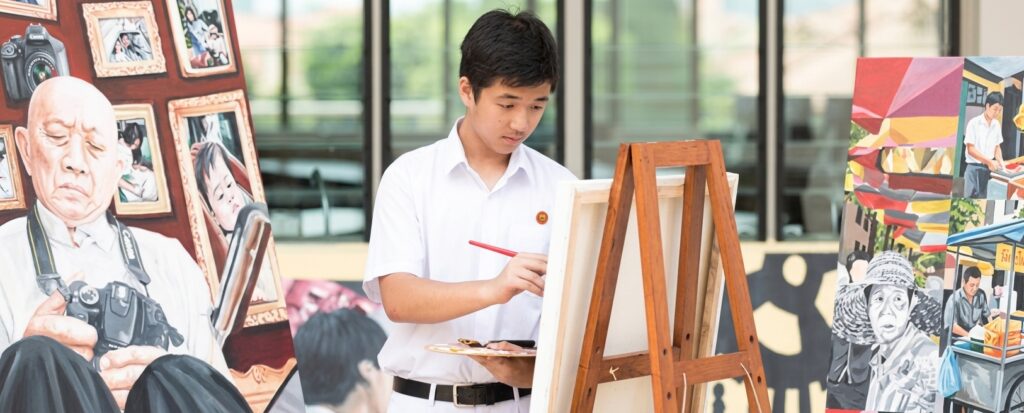

Art elective programme Choosing between a standard art class and a specialized programme is a real decision with real tradeoffs for a student’s secondary school years. The Art Elective Programme gives artistically inclined students in Singapore a genuinely deeper path into art, replacing standard lower secondary subjects with a four-year, exam-focused art curriculum. This guide covers exactly how the programme works, which schools offer it, and how to decide if it fits your child.
What Is the Art Elective Programme?
The Art Elective Programme, commonly abbreviated as AEP, is a Ministry of Education initiative in Singapore offered at both the secondary and junior college levels. First announced in 1983 and launched in January 1984 at the Chinese High School and Nanyang Girls’ High School, it began as an enrichment option for students showing strong artistic flair.
At the secondary level, the AEP runs as a four-year course starting from Secondary 1, preparing students for the Singapore-Cambridge Higher Art examination. Students accepted into the programme take Higher Art in place of Design & Technology and Food & Consumer Education during their lower secondary years, which is a meaningful curriculum trade-off worth understanding before applying.
A separate two-year version of the AEP is also offered at selected junior colleges, giving students who developed an interest in art earlier a way to continue that pursuit at the pre-university level.
Full Reference Table: Art Elective Programme Overview
Here’s a complete breakdown of the programme’s core structure, based on official Ministry of Education documentation.
| Detail | Information |
|---|---|
| Programme name | Art Elective Programme (AEP) |
| Administering body | Ministry of Education, Singapore |
| Year established | Announced 1983, launched January 1984 |
| First offering schools | Chinese High School, Nanyang Girls’ High School |
| Secondary-level duration | 4 years, starting Secondary 1 |
| Junior college-level duration | 2 years, pre-university level |
| Secondary exam prepared for | Singapore-Cambridge Higher Art examination |
| Subjects replaced (secondary) | Design & Technology, Food & Consumer Education |
| Entry requirement | Passing the AEP selection exercise |
| Curriculum components | Studio practice, art criticism, Study of the Visual Arts (SOVA) |
| Common software taught | Adobe Illustrator and similar digital art tools |
Keep this table on hand when comparing the AEP against a school’s standard art offerings.
How the Curriculum Actually Works
The AEP curriculum combines hands-on studio practice with a genuine academic component, rather than functioning as a purely creative elective. Students engage with a range of materials, media, and creative processes across their four years in the secondary programme, developing technical skill alongside conceptual thinking.
A component called Study of the Visual Arts, or SOVA, teaches students to analyze and critique work by established artists, building the kind of art criticism skills that go beyond simply making art. Lessons typically take place in a dedicated classroom setting, sometimes scheduled after regular school hours, and schools offering the programme generally maintain a proper art room, a media lab, and facilities for storing and using art materials.
Every year, students complete at least two projects spanning different areas of art and design, such as photography or logo design, building a portfolio of original work across their time in the programme.
Eligibility: Who Can Apply for the Art Elective Programme?
All Secondary 1 students, regardless of which posting group they belong to, can apply for the AEP provided they pass the school’s AEP selection exercise. This selection test varies by school, since programme structure is broadly consistent across offering schools but includes some customization reflecting each school’s specific strengths.
Eligibility beyond passing the selection exercise is also subject to each school’s own discretion, based on additional considerations that individual AEP schools may apply. This means passing the selection test is a necessary step, but not always an automatic guarantee of a place, particularly at schools where demand for available spots is high.
Students interested in applying should contact their intended school directly for specifics on selection test format and any additional requirements beyond the standard Ministry of Education criteria.
Which Schools Offer the Art Elective Programme?
The AEP is only available at selected secondary schools and junior colleges specifically authorized to offer it by the Ministry of Education, rather than being a universally available option. Chinese High School and Nanyang Girls’ High School were the original two schools offering the programme starting in 1984, and the list of participating schools has expanded since then.
Because not every secondary school or junior college offers this programme, checking the Ministry of Education’s official school listings is the most reliable way to confirm current offering schools before making enrollment decisions. School offerings can also change over time as the Ministry adjusts programme availability, so relying on a specific school’s current published information rather than older secondhand sources matters for accuracy.
Parents researching options should also compare the AEP against a related option called the Enhanced Art Programme, a shorter two-year upper secondary alternative offered at some schools instead of the full four-year AEP.
AEP vs Enhanced Art Programme
Understanding the difference between these two related Ministry of Education art programmes helps families choose the right fit. The table below breaks down the core distinctions.
| Feature | Art Elective Programme (AEP) | Enhanced Art Programme (EAP) |
|---|---|---|
| Duration | 4 years | 2 years |
| Starting level | Secondary 1 | Upper secondary |
| Curriculum depth | Full replacement of two subjects | Shorter, less intensive commitment |
| Best suited for | Students committed early to an in-depth art path | Students discovering strong interest later |
Choosing between the two comes down largely to when a student’s interest and commitment to art becomes clear, since the AEP requires a much earlier and longer-term commitment than the EAP.
What Students Gain From the Art Elective Programme
Beyond exam preparation, the programme aims to develop students as practitioners, scholars, advocates, and leaders within the art field, according to the Ministry of Education’s own stated curriculum goals. This framing positions the programme as more than technical skill-building, aiming to build a broader identity and confidence around art as a serious pursuit.
Access to specialized studio facilities, equipment, and resources gives students hands-on experience with tools and materials that a standard art elective typically wouldn’t include. Former AEP students have gone on to notable achievements in the arts, including national and international competition recognition, illustrating the kind of long-term outcomes the programme can support for genuinely committed students.
This combination of technical training, critical thinking development, and specialized access is what distinguishes this programme from a general enrichment art class.
The Curriculum Trade-Off Worth Understanding
Committing to the AEP means giving up standard lower secondary subjects, specifically Design & Technology and Food & Consumer Education, in favor of Higher Art. This is a genuine trade-off, not just an addition to a student’s existing schedule, and families should weigh it accordingly before applying.
For students with strong, established artistic interest, this trade generally makes sense, since the programme’s depth and specialized resources typically outweigh what’s given up. For students who are curious about art but not yet certain of a long-term commitment, the shorter Enhanced Art Programme or a standard art elective might offer a lower-commitment way to explore that interest first before committing to the full four-year path.
Discussing this trade-off honestly with your child, rather than assuming artistic talent alone justifies the commitment, leads to a more informed decision either way.
How to Prepare for the AEP Selection Exercise
Since admission depends on passing a school-specific selection exercise, some preparation genuinely helps a student’s chances. Building a small portfolio of original artwork demonstrating range across different media gives selectors a clearer sense of a student’s current skill level and interests.
- Practice across multiple media, including drawing, painting, and basic digital tools, rather than specializing narrowly before applying
- Research the specific offering school’s programme details and any published information about their selection process
- Talk directly with the school’s Arts Education contact if questions arise about test format or expectations
- Consider whether the four-year commitment genuinely fits your child’s interests before investing significant preparation time
- Look at examples of past AEP student work where available, to understand the general skill level expected
Genuine, sustained interest in art tends to matter more during selection than last-minute technical polish, so ongoing creative practice is generally a better investment than short-term test preparation alone.
Frequently Asked Questions
What is the Art Elective Programme?
Short answer: It’s a Ministry of Education programme in Singapore that lets artistically inclined students pursue an in-depth, exam-focused art curriculum, offered as a four-year secondary programme or a two-year junior college programme.
First launched in January 1984, the secondary-level version replaces Design & Technology and Food & Consumer Education with Higher Art, preparing students for the Singapore-Cambridge Higher Art examination. A shorter, related option called the Enhanced Art Programme is also available at some schools.
How do you get into the AEP?
Short answer: Students must pass an AEP selection exercise administered by their specific school, and eligibility beyond that is subject to each school’s own discretion.
All Secondary 1 students, regardless of posting group, are eligible to apply for the selection exercise. Since selection criteria can vary somewhat by school, contacting the specific school directly is the most reliable way to understand exact requirements.
Which schools offer the AEP?
Short answer: Only selected secondary schools and junior colleges authorized by the Ministry of Education offer this programme, starting with Chinese High School and Nanyang Girls’ High School in 1984.
The current list of offering schools has expanded since then, and checking the Ministry of Education’s official school listings gives the most accurate, up-to-date information. Not every school offers the programme, so confirming availability before applying matters.
What subjects does the AEP replace?
Short answer: At the secondary level, students take Higher Art in place of Design & Technology and Food & Consumer Education during their lower secondary years.
This is a genuine curriculum trade-off, not simply an additional subject layered on top of a standard schedule. Families should weigh this exchange carefully against their child’s actual level of commitment to art before applying.
What’s the difference between the AEP and the Enhanced Art Programme?
Short answer: The Art Elective Programme runs four years starting from Secondary 1, while the Enhanced Art Programme is a shorter two-year option offered at the upper secondary level.
The AEP suits students with an early, well-established interest in art, while the EAP offers a lower-commitment path for students who develop strong interest somewhat later. Both are Ministry of Education programmes, but they differ meaningfully in duration and depth.
Does the AEP prepare students for a specific exam?
Short answer: Yes, the secondary-level programme prepares students for the Singapore-Cambridge Higher Art examination, which can also be offered as a GCE O-Level subject.
Students complete at least two art and design projects annually throughout the programme, building a portfolio alongside their exam preparation. The curriculum also includes a Study of the Visual Arts component, teaching students to critically analyze established artists’ work.
About This Guide
This guide was compiled using official Ministry of Education Singapore documentation and publicly available school programme information, cross-checked for accuracy before publication. Programme details, offering schools, and eligibility criteria are set by the Ministry of Education and may be updated over time, so confirming current details directly with MOE or a specific offering school is recommended before making enrollment decisions.
Sources referenced:
- Ministry of Education Singapore, Art Elective Programme (AEP) for Secondary
- Ministry of Education Singapore, Art Elective Programme (AEP) for Junior College
- Ministry of Education Singapore, Overview of the Art Elective Programme
- Wikipedia, Art Elective Programme (Singapore)
Considering the Art Elective Programme for your child? Review the eligibility and curriculum details above, then reach out to a specific offering school or the Ministry of Education’s Arts Education Branch to confirm current selection requirements.