
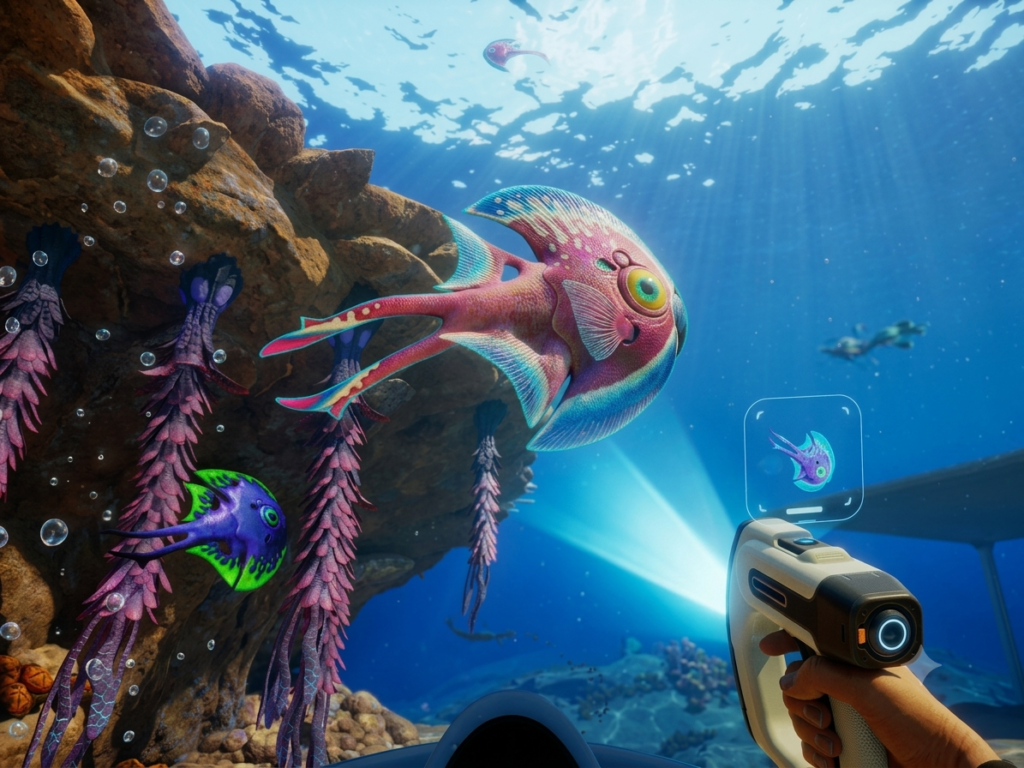

Necrolei cyst Confusing a resource organism with a random decoration costs new players hours of wasted exploration time. The Necrolei Cyst looks like ordinary seabed scenery at first glance, yet it holds the key ingredient behind one of Subnautica 2’s most important crafting materials. This guide breaks down exactly what the organism is, how its biology works, and how to turn it into a reliable resource stop for the rest of your playthrough.
What Is a Necrolei Cyst, Exactly?
This organism is a harvestable polyp found in Subnautica 2, classified in-game as the dormant stage of a jelly-like creature called the necrolei. Rather than functioning as a static resource node, this organism is a living, cycling life form that repeatedly transitions between two distinct states.
The cyst stage sits fixed in place, anchored to a host structure called a Stilt Orb, where it produces small clone offshoots. Those offshoots eventually mature into free-swimming jellies before some of them revert back into cyst form later, completing a loop that has no confirmed end point in the game’s current lore entries.
Players interact with this organism specifically to harvest its acid-rich buds, which is the entire reason it matters for progression rather than just world-building flavor.
Necrolei Cyst Biology and Appearance
Recognizing this organism on sight saves time compared to reading a wiki entry mid-dive. The organism has a rounded, green fleshy body supported by six slender, stilt-like legs that lift it slightly off the surrounding structure it’s attached to.
Small pink blisters sit unevenly scattered across the top of the orb-shaped body, giving it a slightly mottled, organic texture rather than a smooth or symmetrical appearance. This visual pattern helps distinguish it from other similarly colored flora and fauna found in the same biome pockets.
Internally, the organism carries a strongly acidic composition, which the game’s own lore entries describe as more corrosive than a vulture’s stomach. That acid content is exactly what makes it valuable once processed into a usable crafting material.
Full Reference Table: Key Details
Here’s a complete snapshot of the organism’s key facts, gathered in one place for quick reference.
| Category | Detail |
|---|---|
| Classification | Polyp stage of the necrolei jelly (Anthobrachia necrolei) |
| Body structure | Round green body, six stilt-like legs, pink blisters |
| Host structure | Grows on Stilt Orbs |
| Harvested item | Necrolei Buds |
| Harvest tool | Survival Multitool |
| Interior chemistry | Highly acidic, more corrosive than described stomach acid |
| Primary output | Strong Acid (after Processor conversion) |
| Life cycle status | Repeatedly cycles between cyst and jelly forms |
| Resource type | Renewable |
| Threat level | Low direct threat during standard harvesting |
Bookmark this table if you want a fast fact-check without re-reading the full explanation each time.
How the Necrolei Cyst Life Cycle Works
Understanding the biology behind this organism explains why it behaves differently from most other harvestable resources in Subnautica 2. The cyst stage buds off small clone offshoots, sometimes referred to as medusae, which detach and begin swimming freely in search of decaying organic matter.
Over time, some of these free-swimming jellies revert back into cyst form, reattaching to a host structure and beginning the cycle again. In-game lore suggests the organism may be biologically immortal, since there’s no stated limit on how many times an individual can shift between these two life stages.
This cycle is the underlying reason a single Necrolei Cyst cluster keeps producing usable resources indefinitely, rather than depleting after one or two harvesting passes.
What Does the Necrolei Cyst Produce?
Harvesting this organism yields Necrolei Buds, which is the actual inventory item players carry back for crafting. These buds inherit the parent cyst’s concentrated hydrochloric acid content, making them the raw ingredient behind Strong Acid production.
Strong Acid, in turn, feeds into several important recipes across the early and mid-game, including the Rebreather and Power Cells for the Tadpole mini-submersible. Compared to Mild Acid, which comes from the more common Acidic Raion organism, Strong Acid specifically requires this Necrolei-based ingredient chain and a functioning Processor facility.
This makes it less of a background creature and more of a functional checkpoint in the game’s early crafting progression.
How to Harvest a Necrolei Cyst
Harvesting takes only a few seconds once you’ve located an active cluster. Equip your Survival Multitool and interact with the flower-like structure sitting on top of the Stilt Orb the cyst is attached to.
This action yields Necrolei Buds directly into your inventory without damaging or destroying the host cyst itself, which is what allows the resource to remain renewable over repeated visits. If a cluster appears depleted, additional Stilt Orbs often exist nearby along connected terrain features like ravines or slopes.
Carrying extra inventory space on any dedicated harvesting trip helps, since Strong Acid recipes come up often enough that a light haul usually means a return trip sooner than expected.
Necrolei Cyst vs Necrolei Bud: Clearing Up the Confusion
These two terms describe different things, and mixing them up causes real confusion when reading crafting menus or community guides. The cyst refers to the stationary organism itself, permanently attached to its host Stilt Orb.
The bud is the harvested item that actually enters your inventory and gets processed into Strong Acid. Crafting recipe lists specifically reference “Necrolei Buds” as the required ingredient, so searching an in-game menu for “cyst” won’t return the correct crafting entry.
Keeping this distinction straight matters most when you’re double-checking whether you have enough materials before starting a build.
Comparing This Organism to Other Acid Sources
Subnautica 2 includes more than one source of acid-based crafting materials, and understanding the differences helps you choose the most efficient option for your situation. The table below compares the main sources available.
| Source | Acid Type Produced | Harvest Method | Availability |
|---|---|---|---|
| Necrolei Cyst | Strong Acid (via Processor) | Multitool on Stilt Orb | Specific biome clusters |
| Acidic Raion | Mild Acid | Direct harvest | Common, widespread |
| Sulphur + Gold | Strong Acid (alternate recipe) | Mining/adaptation required | Requires Heat Tolerance unlock |
This route stays the more direct path to Strong Acid for most players, since the sulphur-and-gold alternative requires an additional adaptation unlock first.
Common Mistakes Players Make With This Resource
A few recurring errors slow players down when dealing with this organism for the first time. Avoiding these saves real exploration and crafting time.
- Confusing the cyst with the bud when checking crafting menu requirements, leading to unnecessary return trips
- Harvesting only one or two buds per visit instead of stocking up for multiple future crafting sessions
- Skipping the Processor blueprint scan, which blocks Strong Acid crafting even with a full inventory of buds
- Overlooking secondary Stilt Orb clusters nearby when a first cluster appears depleted
- Underestimating oxygen needs for the moderate-depth dives required to reach known cluster locations
Correcting even one or two of these habits meaningfully speeds up early-game progression.
Why This Organism Matters for Long-Term Progression
This organism earns a spot on any serious player’s priority list because of how many downstream systems depend on Strong Acid. Both the Rebreather and Power Cells sit early in most players’ progression paths, and both require this specific crafting chain.
Because the organism is renewable rather than a one-time harvest, locating a single confirmed cluster functions as a long-term resource investment rather than a repeated scavenger hunt. Players who identify and remember one reliable cluster early tend to spend noticeably less time backtracking for materials later in the game.
This is part of why community guides consistently flag this organism as a priority early discovery, even though its role isn’t explained in detail during the game’s opening hours.
Tips for Managing Your Resource Supply
A little planning turns this organism from a repeated inconvenience into a reliable, low-effort resource stop. These habits keep your Strong Acid supply consistent throughout a playthrough.
- Build your Processor facility as close as reasonably possible to a known cluster location
- Harvest in batches large enough to cover several crafting sessions rather than single items
- Keep a mental or written note of secondary cluster locations as backup options
- Pair harvesting trips with other resource gathering in the same biome pocket
- Revisit known clusters periodically, since the organism’s renewable cycle means supply replenishes over time
Treating this as a scheduled resource run, rather than a reactive scramble, keeps your crafting queue moving smoothly.
Frequently Asked Questions
What is a Necrolei Cyst used for?
Short answer: It’s harvested for Necrolei Buds, which are processed into Strong Acid, a crafting material required for items like the Rebreather and Power Cells.
Strong Acid sits behind several important early and mid-game recipes in Subnautica 2, making this organism a practical priority rather than background scenery. An alternate Strong Acid recipe exists using sulphur and gold, but it requires unlocking the Heat Tolerance adaptation first.
Is the Necrolei Cyst a renewable resource?
Short answer: Yes, the organism cycles repeatedly between cyst and free-swimming jelly forms, continuously producing new harvestable buds over time.
In-game lore entries suggest the organism may be biologically immortal, with no confirmed limit on how many times it can shift between life stages. This means a single confirmed cluster location remains a usable resource stop for an entire playthrough.
How do I harvest a Necrolei Cyst?
Short answer: Equip your Survival Multitool and interact with the flower-like structure on top of the Stilt Orb the cyst is attached to.
This yields Necrolei Buds directly into your inventory without destroying the host organism, which is why the resource remains renewable. If a cluster seems depleted, check nearby ravines or slopes, since additional Stilt Orbs often grow along the same terrain.
What’s the difference between a Necrolei Cyst and a Necrolei Bud?
Short answer: The cyst is the stationary organism itself, while the bud is the item you actually harvest and carry in your inventory.
Crafting menus specifically reference “Necrolei Buds” as the required ingredient, not the cyst. Keeping this distinction clear helps avoid confusion when checking whether you have enough materials for a specific recipe.
Is the Necrolei Cyst dangerous?
Short answer: The organism itself poses no direct combat threat, though its interior chemistry is highly corrosive and the surrounding biome may attract other wildlife.
The concentrated acid stays contained within the cyst structure during normal harvesting, so standard exploration caution is enough. Watch your oxygen supply during the dive, since known cluster locations tend to sit at moderate depth.
Where do Necrolei Cysts typically appear?
Short answer: They cluster in specific biome zones, often near distinctive neon anemone fields, rather than spawning randomly across the map.
Multiple confirmed cluster sites exist within a few hundred meters of common starting points, making the organism accessible early in a playthrough. Checking nearby ravine or slope terrain often reveals additional Stilt Orb clusters once a first site is depleted.
About This Guide
This guide was compiled using the official Subnautica 2 wiki, verified gaming publication walkthroughs, and direct in-game observation, cross-checked for accuracy before publication. Subnautica 2 remains in early access, so exact mechanics, locations, and recipes may shift with future updates.
Sources referenced:
- Subnautica 2 Wiki, Official Necrolei Cyst Entry
- GamesRadar+, Subnautica 2 Necrolei Cyst Location Guide
- PC Gamer, How to Get Strong Acid in Subnautica 2
- Wikipedia, Subnautica 2 Game Overview
Ready to make the most of this resource? Track down your nearest cluster, keep the reference table above handy, and build your Processor facility close by so Strong Acid never slows down your progress again.